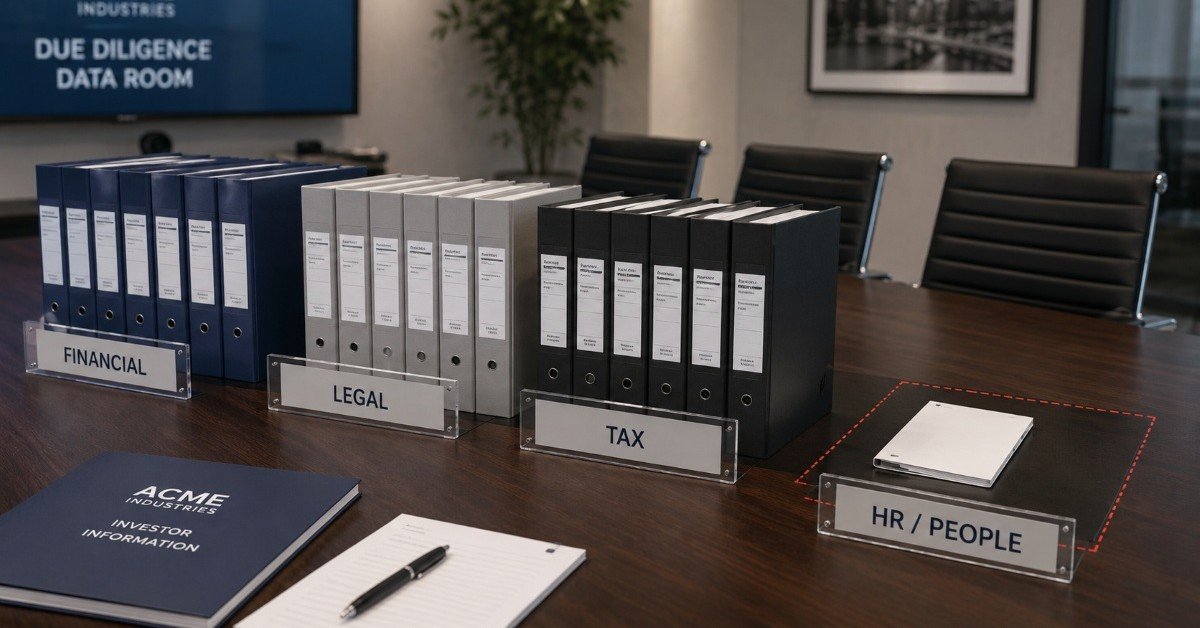
I’ve reviewed the HR side of enough transactions to know the pattern by heart. The financial diligence is meticulous — every line item scrutinized, every projection stress-tested. The legal diligence is thorough — contracts reviewed, IP verified, litigation history documented. Then someone asks about the people side, and the process thins out dramatically. A headcount spreadsheet. Maybe a benefits summary. An org chart that may or may not be current. A vague assurance that “the team is strong.”
This gap is remarkable when you consider what’s at stake. Research consistently shows that people issues are among the primary drivers of M&A underperformance. A Bain & Company analysis found that 75% of acquirers face significant cultural challenges during integration. A 2024 study by Instill found that up to 60% of M&A failures post-close can be traced back to cultural misalignment. And a survey of more than 450 senior HR executives found that the top seven obstacles to M&A success all related, directly or indirectly, to people issues — including the number one obstacle, which was the inability to sustain financial performance post-close.
The people risk in a transaction isn’t a soft concern. It’s a financial one. And it’s the most consistently underpriced factor in most deals.
What Acquirers Typically Miss
Standard HR due diligence — when it happens at all — usually covers the basics: headcount, org structure, benefits costs, pending litigation, and maybe a compensation summary. That’s necessary but insufficient. The risks that actually affect deal value and post-close performance are the ones that require deeper investigation:
Key person dependencies. In a 200-person company, there are typically 5–10 people without whom the business would materially suffer — the VP who owns every major client relationship, the engineer who built the core system and is the only person who understands it, the operations leader whose departure would leave a six-month knowledge vacuum. Identifying these dependencies isn’t just a talent question. It’s a valuation question. If three key people leave within 12 months of close — which is common in founder-led acquisitions — the value you paid for may walk out the door.
Compliance exposure you inherit. Employee misclassification (the “independent contractors” who are really employees), wage and hour violations that haven’t surfaced yet, I-9 documentation gaps, multi-state compliance for remote workers — these liabilities transfer to the acquirer at close. A company that’s been operating in six states without proper registrations in four of them has a compliance bill that’s real, quantifiable, and coming. If you don’t find it in diligence, you’ll find it in your first DOL audit.
Compensation promises that aren’t documented. Informal agreements are rampant in growing companies. The COO who was promised equity that was never formalized. The sales director who has a verbal agreement for a bonus structure that isn’t in their offer letter. The founder’s handshake deal with an early employee on a severance arrangement that nobody wrote down. Each of these becomes a liability at close — and they’re invisible to standard financial diligence.
Cultural integration complexity. The acquirer’s culture is hierarchical and process-driven. The target’s culture is flat and entrepreneurial. Nobody assessed the gap during diligence, and now the integration is producing exactly the friction and talent attrition that a 90-minute cultural assessment would have predicted. Mercer’s research found that cultural integration issues negatively impacted at least $1 million of value in over 70% of cases. For larger deals, the figure was often well above $5 million.
Retention risk in the leadership team. How many of the target’s leaders have non-competes? Are those non-competes enforceable in their jurisdictions? What’s the vesting schedule on outstanding equity, and does the transaction trigger acceleration? Are there change-in-control provisions that create golden parachute obligations? And most importantly: have you actually talked to the leaders you’re counting on to stay, or are you assuming they’ll be there because the deal memo says so?
What Sellers Can Prepare Before Buyers Look
If you’re on the sell side, the time to address HR risk is before the data room opens — not when a buyer’s diligence team finds it. Every issue a buyer discovers is a negotiating chip: a price reduction, a longer escrow, a heavier reps-and-warranties package, or, in the worst case, a reason to walk away. Issues the seller identifies and addresses proactively are management strengths. The same issues discovered by a buyer are red flags.
Audit your documentation. Employee files, offer letters, employment agreements, non-competes, I-9s, handbook acknowledgments. Are they complete, current, and consistent? If your 2019 handbook is your current handbook and you’ve added employees in three new states since then, that’s a gap a buyer will find. Fix it before they do.
Formalize the informal. Every verbal compensation agreement, every handshake equity promise, every informal arrangement with a key employee needs to be documented. This isn’t just diligence preparation — it’s good business practice. But the transaction timeline creates the urgency to finally do it.
Run your own compliance check. Before a buyer’s team starts looking at your classification practices, your state registrations, your wage-and-hour compliance, and your benefits administration — look at them yourself. Identify the issues. Quantify the exposure. Build a remediation plan. When the buyer’s team raises the question, you have an answer: “We identified this, here’s our assessment of the exposure, and here’s what we’ve already done to address it.” That response builds confidence rather than eroding it.
Assess your key person risk honestly. Which people would a buyer be most concerned about losing? Do those people have enforceable non-competes and reasonable retention incentives? Have they been told about the potential transaction, and are they supportive? A seller who can demonstrate that their critical talent is retained, incented, and engaged is in a materially stronger negotiating position than one who says “We think they’ll stay.”
Document your culture. This doesn’t mean creating a glossy culture deck. It means having data: engagement survey results, turnover trends by department, Glassdoor ratings and trends, promotion rates, diversity metrics if you track them. A buyer who can see that your culture is strong and your people are engaged will price that into the deal. A buyer who sees no data will assume the worst and discount accordingly.
Why This Diligence Requires Specialized Expertise
Standard M&A advisory teams — investment bankers, corporate attorneys, CPAs — are excellent at what they do. They’re not HR practitioners. They know that employment agreements matter but may not know how to evaluate whether a non-compete is enforceable in California versus Texas. They know that benefits represent a cost but may not know how to assess whether a self-funded health plan has stop-loss exposure that could create a post-close surprise. They know that “the team is important” but don’t have a framework for assessing leadership bench strength, succession risk, or cultural compatibility.
HR due diligence requires someone who has run people functions, understands employment law at a practical level, can assess organizational health from both quantitative and qualitative data, and knows what “good” looks like for a company at the target’s size and stage. That’s a different skill set from the one that evaluates EBITDA adjustments or intellectual property portfolios — and it’s the skill set that most deal teams are missing.
The Timeline That Works
For buyers, HR diligence should start when financial diligence starts — not two weeks before close when someone remembers to ask about the org chart. A thorough HR diligence process for a mid-market deal takes three to five weeks and runs in parallel with the other workstreams. The deliverable is an HR Due Diligence Report that quantifies identified risks, recommends deal consideration adjustments (price reductions, escrow provisions, specific reps and warranties), and provides Day 1 integration priorities so the acquirer can execute immediately after close.
For sellers, the preparation window is ideally six to twelve months before going to market. That’s enough time to audit documentation, remediate compliance gaps, formalize key agreements, and build the data package that demonstrates people health. A sell-side HR readiness engagement typically takes four to six weeks and produces a Readiness Report with findings, risk ratings, and a prioritized remediation roadmap — plus a documentation checklist for the data room.
Three Things You Can Do This Week
1. If you’re considering an acquisition, add HR diligence to your standard diligence checklist. Not as a last-minute add-on — as a parallel workstream that starts when financial and legal diligence start. Define the scope: documentation review, compliance audit, compensation analysis, key person assessment, cultural compatibility review, and integration complexity assessment. If your internal team doesn’t have the expertise, bring in someone who does.
2. If you’re a business owner considering a future sale, start the HR audit now. Pull your employee files for 10 random employees and check: is every file complete? Are all I-9s current? Do all offer letters match actual compensation? Is the handbook current and compliant in every state where you have workers? The answers to these questions will tell you how much work is ahead of you — and you’d rather find out now than in a data room under time pressure.
3. If you’re a PE firm or board member, ask your deal teams one question: “What did the HR diligence reveal?” If the answer is vague or the diligence was shallow, that’s a signal that people risk may be underpriced in the deal model. The firms that consistently create value from acquisitions are the ones that take people diligence as seriously as financial diligence — because people risk is financial risk.
People risk doesn’t disappear because it wasn’t in the diligence report. It surfaces after close — in turnover, compliance surprises, integration friction, and the slow erosion of the value you thought you were buying. The investment in thorough HR diligence is a fraction of the cost of discovering these issues after the wire transfer.
We provide HR Due Diligence for both sides of the transaction. Sell-side engagements assess your people infrastructure, identify risks before buyers find them, and produce a remediation roadmap and data room checklist. Buy-side engagements evaluate the target’s HR compliance, compensation liabilities, key person risk, cultural compatibility, and integration complexity — with quantified risk assessments and deal consideration recommendations. Learn about our HR Due Diligence services →
Considering a transaction and not sure where to start on the people side? A discovery call is the right first step. Schedule a discovery call →